
Airfield Signage Replacment Project
Airfield Signage Replacment Project
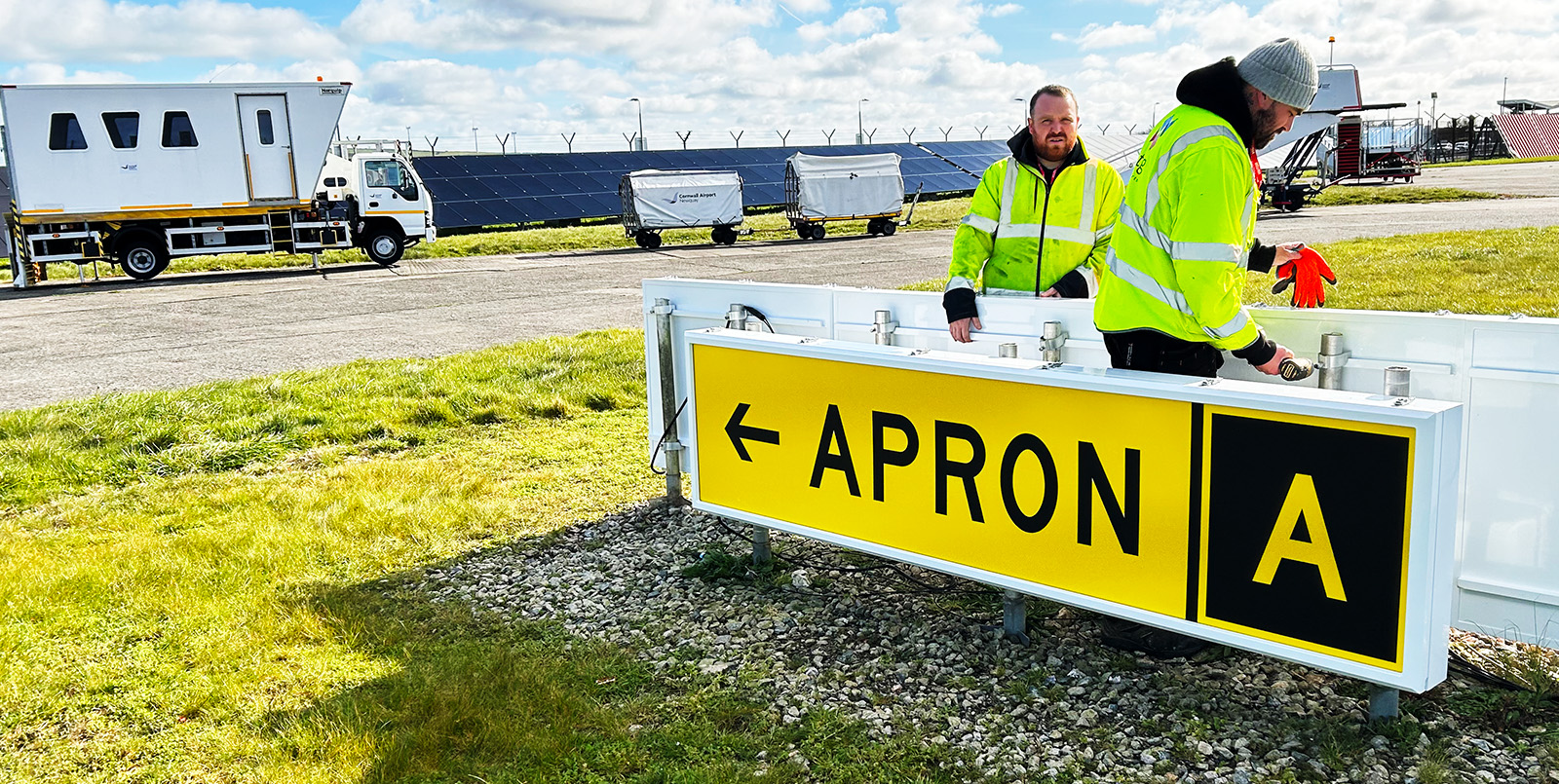
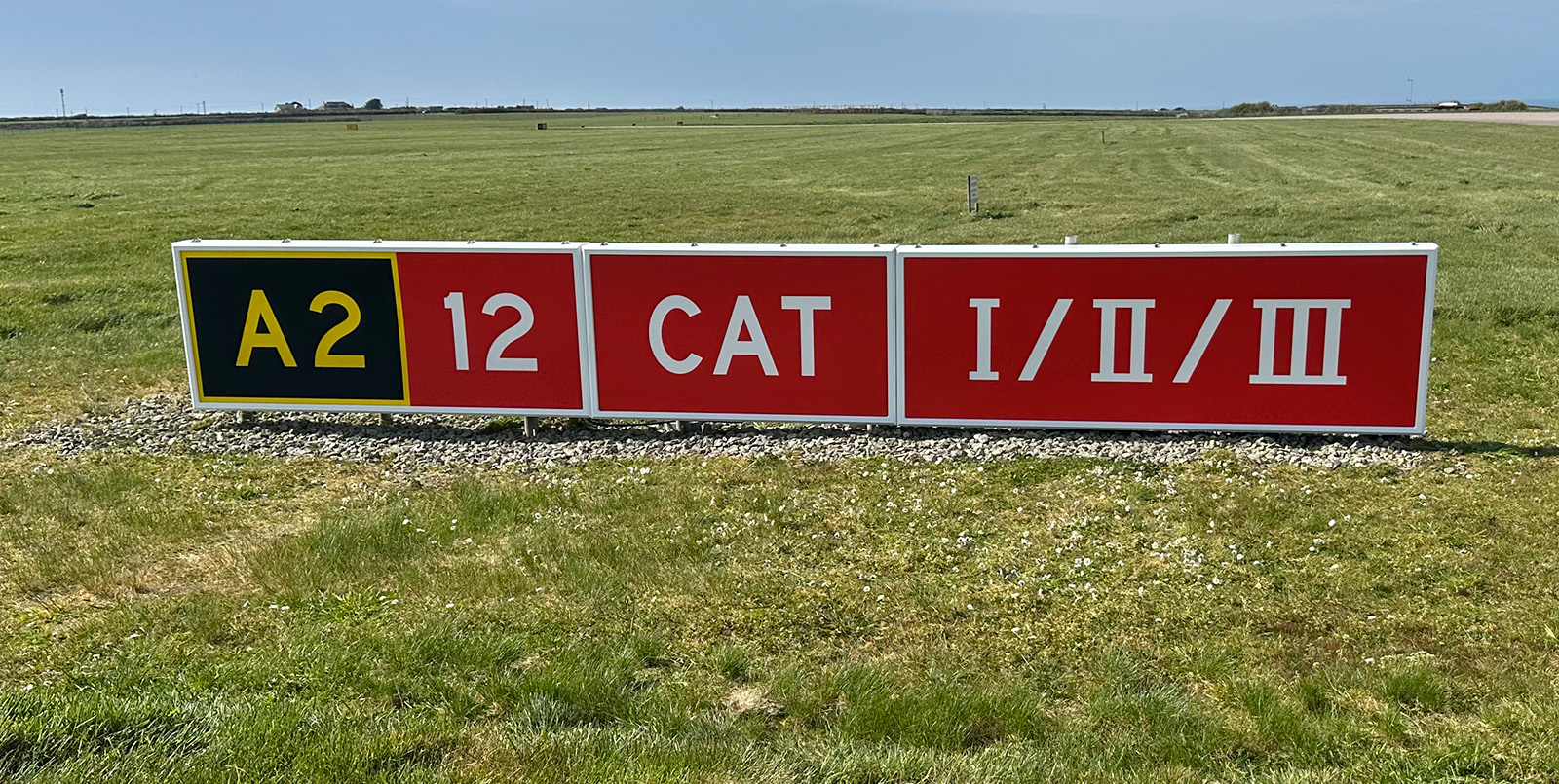
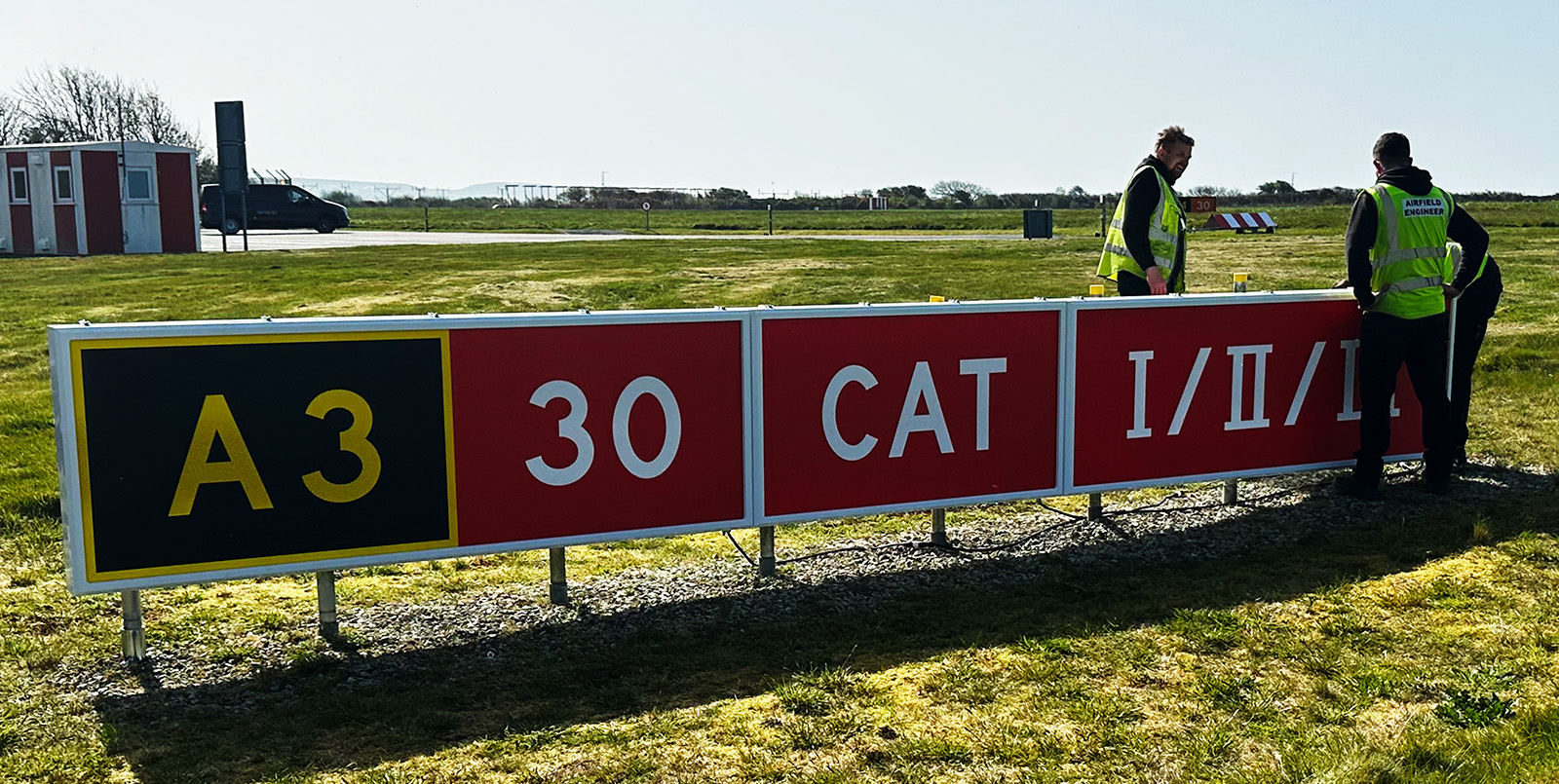
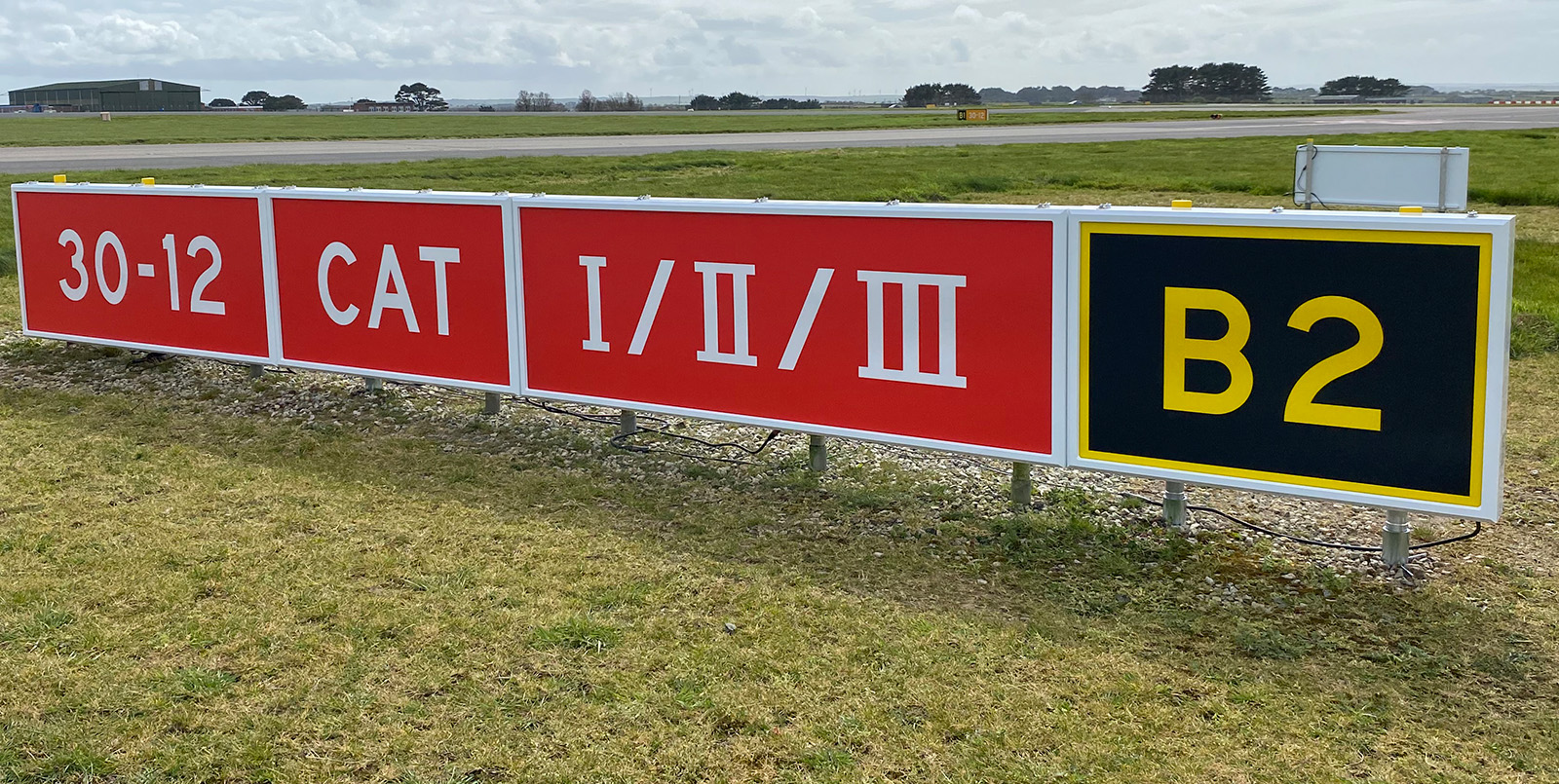
Newquay Airport commissioned a complete airfield signage replacement programme as part of its continued investment in airfield infrastructure, operational efficiency, and long-term airport development. The project included the removal, manufacture, installation, testing, and commissioning of new LED illuminated airfield signs across taxiways, runway holding positions, aprons, and manoeuvring areas, delivering a modern and fully compliant airfield guidance system designed for a busy operational airport.
As commercial aviation and specialist aerospace operations continue to grow, the need for reliable, high-visibility airfield signage became increasingly important. Existing signage assets had reached the end of their operational lifespan, with ageing sign faces, inconsistent layouts, and outdated tungsten halogen lighting systems resulting in increased maintenance requirements and reduced operational efficiency. The project provided an ideal opportunity to modernise the airport’s airfield ground lighting and signage infrastructure using advanced LED airfield sign technology.
The replacement programme delivered a fully standardised signage solution designed in accordance with ICAO Annex 14 and UK CAA CAP 168 requirements. Modern airfield guidance signage plays a vital role in supporting safe and efficient airside operations, enabling the clear movement of aircraft and operational vehicles throughout taxiways, aprons, runway holding points, and other operational areas.
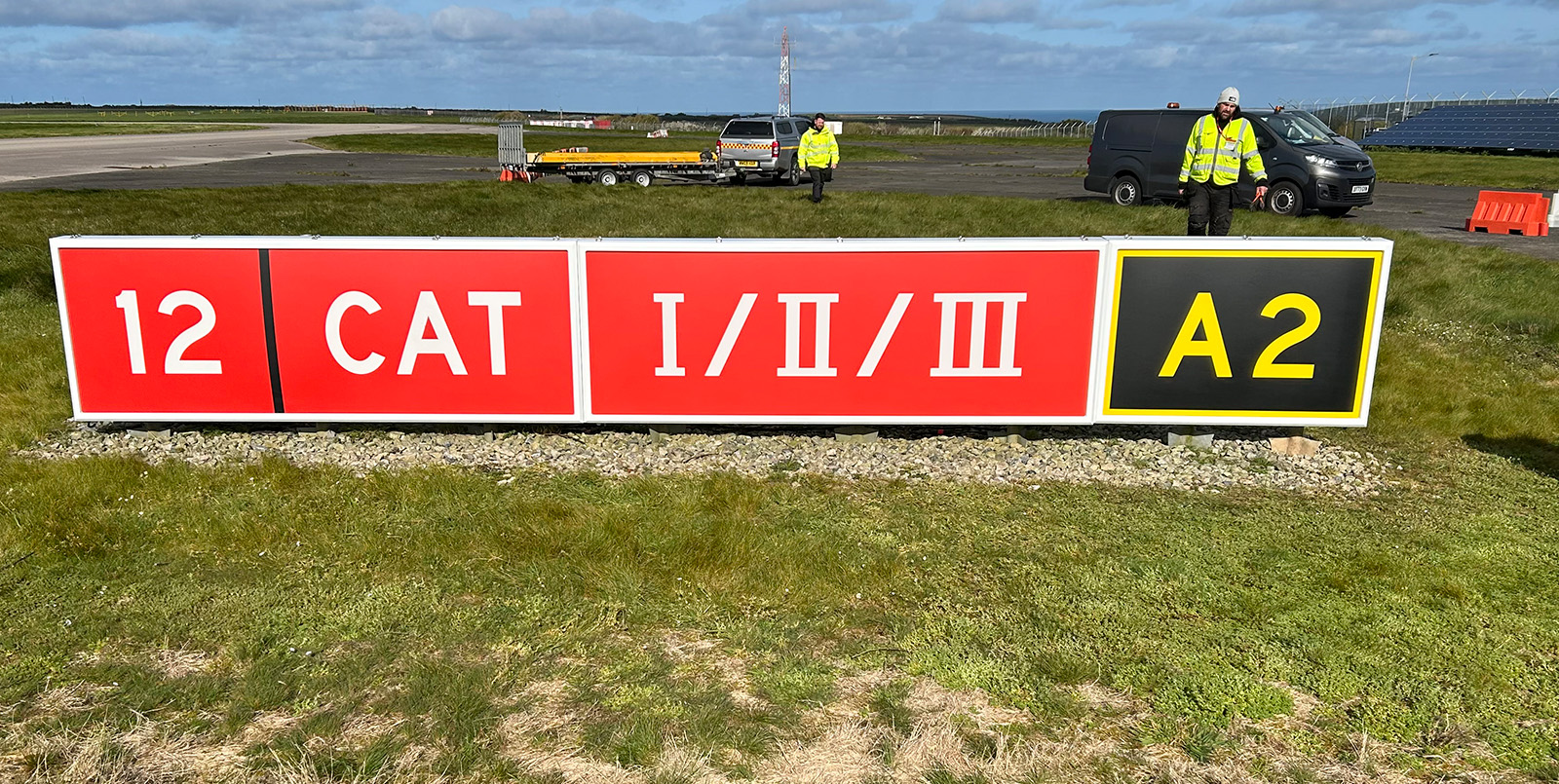
The scope of works included the replacement of mandatory instruction signs, taxiway guidance signs, runway holding position signs, taxiway location signs, runway exit signs, and directional signage. Existing units were carefully removed and replaced with high-performance IR858I LED illuminated airfield signs mounted on compliant frangible supports, creating a visually consistent, energy-efficient, and future-ready airfield environment.
Maintaining uninterrupted airport operations remained a key priority throughout the project. Careful planning and close coordination between airport operations, air traffic control, and installation teams ensured all works were completed safely and efficiently with minimal disruption. Installation activities were phased around aircraft movements and primarily undertaken during dusk, night- time, and low-traffic operational periods to maintain operational continuity throughout the programme.
The introduction of advanced LED airfield signage technology has significantly improved the airport’s operational resilience and long-term infrastructure performance. Compared with traditional tungsten halogen systems, the new LED illuminated signs provide enhanced luminance, lower energy consumption, longer service life, and substantially reduced maintenance requirements. The improved visibility and clarity of the signage system ensures reliable performance during low-light conditions, adverse weather, and reduced visibility operations.
The IR858I LED signs are manufactured from high- strength aluminium extrusions specifically designed for demanding airport environments. Their corrosion- resistant construction provides exceptional durability and reliability, particularly important within Newquay Airport’s exposed coastal location where airborne salt and harsh weather conditions can accelerate deterioration of conventional airfield equipment. This robust design helps minimise whole-life maintenance costs while ensuring long-term operational performance.
Delivering works within a live operational airfield environment required exceptional attention to safety, planning, and operational control. Strict procedures were implemented to manage airside access, electrical isolations, foreign object debris prevention, and coordination with operational stakeholders, ensuring all activities were completed safely and in full compliance with airport operational requirements.
The completed project has provided Newquay Airport with a modern, fully compliant, and future-ready airfield signage system that enhances operational efficiency, strengthens airside safety, and supports the airport’s continued growth and infrastructure strategy.